ACOP stands for "Approved Code of Practice," and it provides practical advice on complying with gas safety regulations. The term ACOP specifically refers to the code published by the Health and Safety Executive (HSE) within document L56, which accompanies the Gas Safety (Installation and Use) Regulations 1998.
⚠️ Important Update
ACOPs courses are now called STGW (Standards of Training in Gas Work), effective from 1st April 2014. However, the terms are often used interchangeably in the industry.
The Legal Framework
Under UK regulations, specifically the Gas Safety (Installation and Use) Regulations (GSIUR) and the Health and Safety at Work Act, all persons working on gas must be competent to carry out their work safely.
What is Competence?
Competence is defined as a combination of practical skill, training, knowledge, and experience to carry out the job safely, ensuring the installation is left in a safe condition for use.
Where Industrial Gas ACOPs Apply
Out of Scope Work
ACOP/STGW courses are specifically designed for gas installers, operatives, and engineers who work outside the scope of the Gas Safety (Installation and Use) Regulations.
Premises that can fall outside the scope of GSIUR — and therefore outside Gas Safe Register requirements, subject to the conditions set out in the Regulations and HSE L56 — include:
▸Factories
▸Quarries
▸Mines
▸Sewage treatment works
▸Test houses
▸Gas training centres
Industrial Applications
Gas is commonly used in numerous industrial settings across multiple industries:
Food Processing
• Bakeries
• Food manufacturing
• Breweries
Manufacturing
• Metals processing
• Chemical works
• Pharmaceutical plants
Other Industries
• Laundries
• Energy centres
• Various facilities
Large numbers of maintenance technicians, gas operatives, and contractors working in these factories often require specialized training in the safe use of gas in industrial settings.
The Role of IGEM Standards
IGEM (Institution of Gas Engineers and Managers) is the professional engineering institution for the gas sector. IGEM's Technical Department develops and maintains technical standards that underpin safe and efficient gas engineering practices, and these standards are highly regarded by organizations such as Ofgem, the HSE, and Gas Safe Register.
IGEM/IG/1 Standard
The IGEM/IG/1 standard, "Standards of Training in Gas Work," provides criteria and guidance to training providers, trainee gas engineers, and employers on the scope, standards, and quality of training required to enable a gas engineer to achieve competence.
Training and Certification Structure
Core Training Elements
📋
Gas Legislation
Understanding regulations and legal requirements
🔥
Combustion & Control
Safe combustion processes and control systems
🌬️
Flues & Ventilation
Proper ventilation and flue systems
⚡
Pressure & Flow
Understanding gas pressure and flow dynamics
Duration and Validity
Certificate Validity
5 Years
STGW qualifications are valid for 5 years, after which renewal is required to maintain competence.
Course Options
5-day:First-time learners or certification renewal
3-day:Intensive refresher for existing certificate holders
Understanding Gas Control Equipment
ACOP/STGW training covers the critical gas control equipment that industrial operatives work with daily. Here are examples of the systems your workforce will be trained to understand, install, and maintain:
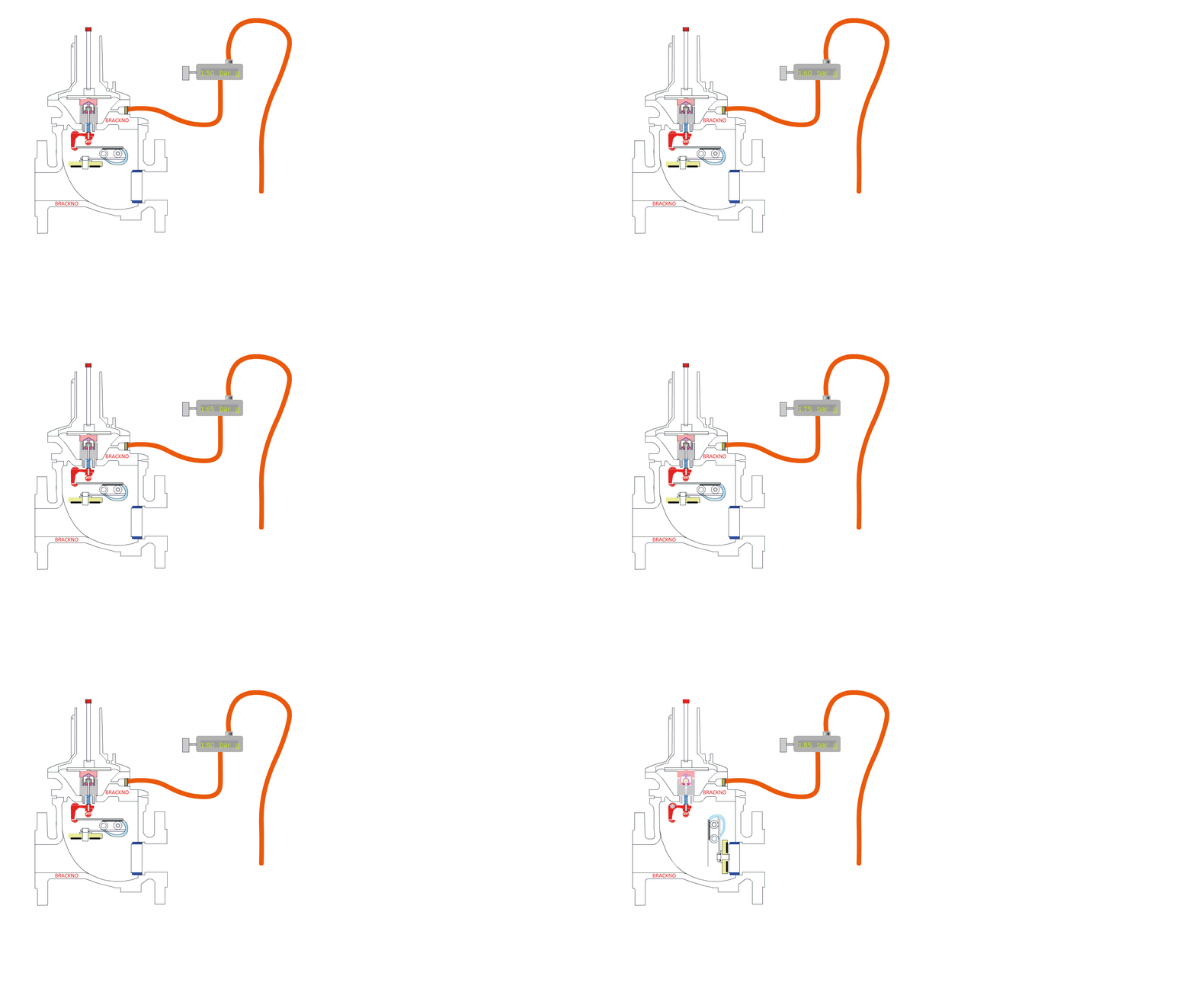
Slam Shut Safety Valve
Automatic safety shut-off valves protect gas systems from over-pressure and under-pressure conditions. Understanding these critical safety components is essential for all industrial gas operatives.
Industrial Gas Pressure Controller
Pressure regulation and control systems maintain safe operating conditions across all pressure regimes. ACOP training ensures operatives understand installation, commissioning, and maintenance procedures.
Hands-on training matters: Understanding these systems theoretically is just the beginning. ACOP/STGW certification includes practical assessment to ensure your operatives can safely work with this equipment in real-world conditions.
Brackno: Your Approved ACOP Training Provider
Approved Provider Status
Brackno is an approved provider of ACOP/STGW training under UK Certification, ensuring that your workforce receives industry-recognized, high-quality training designed to meet the relevant regulatory and competence requirements.
📍 On-Site Training Available
Courses are delivered at your workplace, concentrating on your specific plant and equipment. This ensures your operatives gain hands-on experience with the actual systems they'll be working with daily.
✓Approved centre for Industrial Gas ACOP certification under UK Certification
✓Industry-recognized certification
✓Expert instructors with real-world experience
✓Tailored training solutions for your business
Why Industrial Gas ACOP Certification Matters
⚖️
Legal Compliance
ACOP/STGW courses and certification help satisfy the requirements for 'competence' as laid down by the Health & Safety at Work Act.
🎯
Bespoke Training
Training providers can carry out Training Needs Analysis on businesses and design specific ACOP/STGW gas courses for your workforce.
🛡️
Safety Assurance
Training enables gas engineers to achieve competence in safe installation, testing, servicing, maintenance, and repair of gas systems.
Gas Safe vs ACOP/STGW: Key Distinction
It's crucial for your customers to understand the difference:
Gas Safe Registration
Required for work on domestic and commercial premises that fall within the scope of GSIUR
ACOP/STGW Certification
The appropriate route for industrial premises and other "out of scope" work where Gas Safe registration is not required
Important: Businesses that do not require Gas Safe Register registration, such as factories, quarries, and mines, should ensure their gas operatives hold ACOP/STGW certification. Whether particular work is in or out of scope always depends on the premises and the nature of the work — when in doubt, check against GSIUR and HSE L56.
Interactive Tool
Brackno Fuel & Flue Gas Analyser
Put the theory into practice. Our interactive analyser lets you explore fuel gas properties — composition, CV, relative density and Wobbe number against GS(M)R interchangeability bands — and the flue gas analysis that follows: CO₂ vs O₂, excess air, and Ostwald & Siegert combustion efficiency.
Industrial Gas ACOP (now STGW) certification provides a recognized pathway for demonstrating workforce competence in industrial gas work that falls outside Gas Safe Register requirements. This certification ensures that your industrial workforce is properly trained, legally compliant, and equipped with the knowledge and skills necessary to work safely with gas systems in manufacturing and industrial environments.
Brackno, as an approved provider under UK Certification, can deliver this essential training to your workforce — ensuring your team meets the relevant competence requirements while maintaining the highest standards of safety and competence.
Ready to Train Your Workforce?
As an approved provider of ACOP/STGW training under UK Certification, Brackno can deliver industry-recognized certification training for your industrial gas workforce. Contact us today to discuss your training requirements.